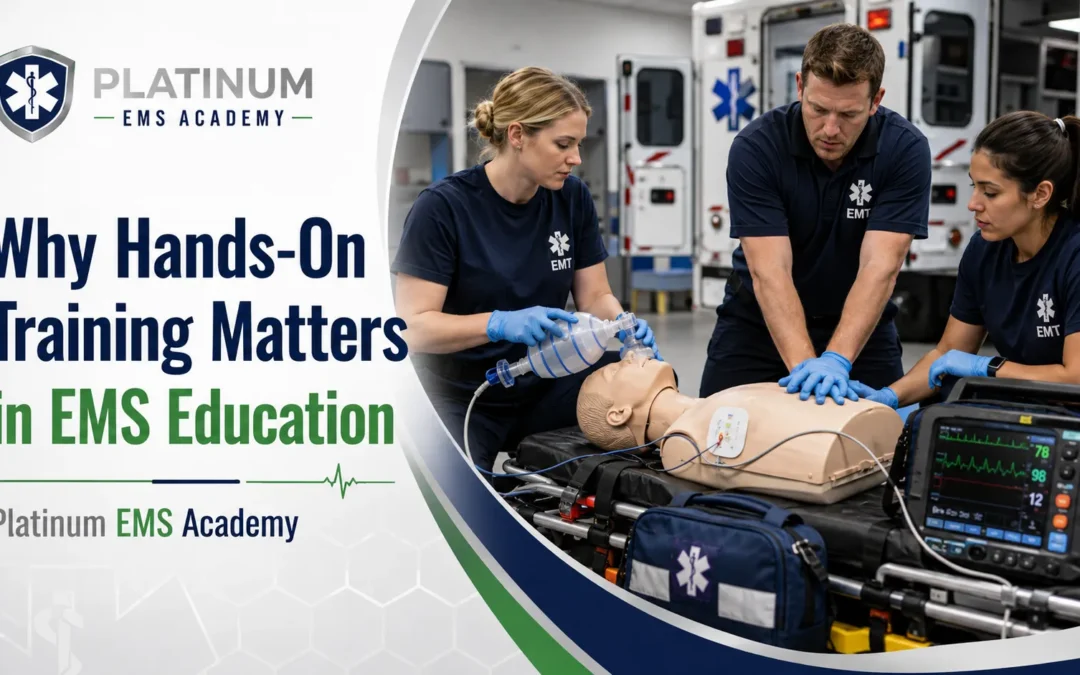
You can learn a great deal about emergency medicine from a textbook, but EMS is a hands-on profession. When an emergency happens, EMTs must be prepared to put their knowledge into action.
That is why hands-on training is such an important part of EMS education.
Practical training gives students an opportunity to practice essential skills such as CPR, patient assessment, airway management, bleeding control, splinting, patient movement, and the use of emergency medical equipment.
It also allows students to work through realistic scenarios where they must determine what is wrong, decide what needs to happen next, communicate with their team, and provide appropriate care.
Repetition is important. Practicing a skill again and again helps students become more comfortable with the equipment and procedures they may eventually use in real emergencies.
Hands-on training also builds confidence. The first time a student performs a skill can feel unfamiliar. With instruction, practice, and feedback, those same steps gradually become more natural.
At Platinum EMS Academy, we believe strong EMS education should combine classroom knowledge with practical experience. Our goal is to help students understand what to do, why they are doing it, and how to perform those skills when they are needed.
Because when someone calls for help, preparation matters.